
On December 9, 2024, a critically ill black bear cub—now known as Cub 24-3926—arrived at Gold Country Wildlife Rescue in dire condition. At just 20 pounds and nearly hairless, he was suffering from multiple serious health issues, including bacterial and fungal skin infections (yeast and ringworm), and deep ear infections in both ears. These conditions, likely worsened by the effects of malnutrition and the stress of being orphaned, had left him severely compromised.
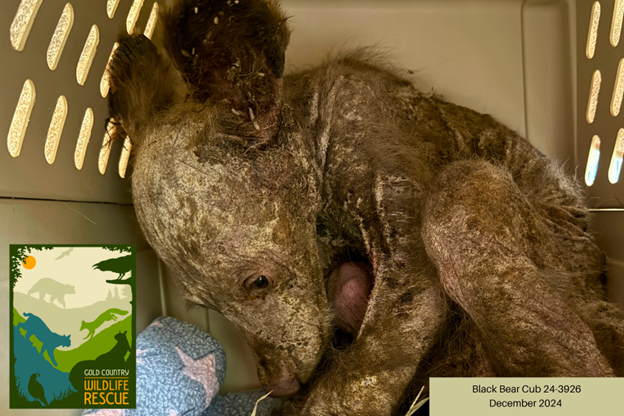
Thanks to the dedicated efforts of GCWR’s expert team and consulting veterinarians, Cub 24-3926 received intensive, whole-body treatment. Over the following months, his care included:
- Systemic, topical, and environmental antifungal protocols
- Specialized treatments for his ear infections
- Nutritional support to promote healthy growth and recovery
- Supplements to support immune function, reduce inflammation, and restore skin and coat health
Now nearly 80 pounds, fully furred, and thriving, this resilient cub has made an inspiring recovery.

However, after thorough monitoring and evaluation, the California Department of Fish and Wildlife (CDFW) has determined that while his progress has been remarkable, there remain concerns about his long-term survivability in the wild. In particular, it’s unclear whether he can reliably grow and maintain the thick undercoat essential for surviving harsh winter conditions—a critical trait for wild bears.
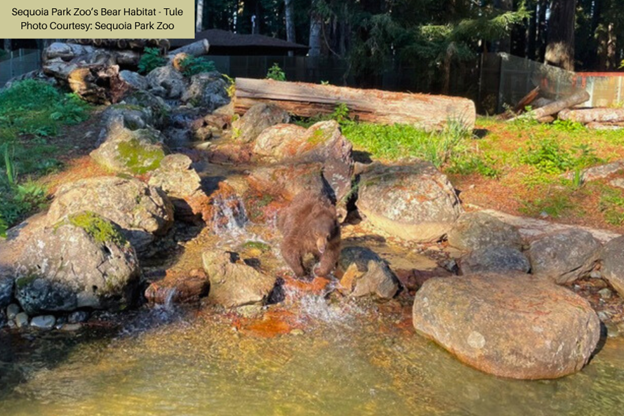
As a result, CDFW has made the compassionate decision to place Cub 24-3926 in permanent human care. We’re thrilled to share that he will be transferring to Sequoia Park Zoo, a facility known for its commitment to providing lifelong homes for orphaned, injured, or habituated black bears. There, he will receive ongoing care, daily enrichment, and the companionship of two other resident black bears, Tule and Ishŭng, who are both three years old. The Sequoia Park Zoo’s large bear habitat features a stream bed including a waterfall that flows into a large pond for swimming and foraging, log structures for resting and playing, and towering redwood trees to climb.
While the exact timing of his transfer is still being finalized, our team will continue to provide loving care until he is ready to move to his new, FURever home.
And now that it’s official that this cub will remain in human care, we are delighted to announce that he will finally be receiving a name, something we know many of his followers have been interested in knowing. The Sequoia Park Zoo’s Black Bear habitat was generously funded by the Bear River Band of the Rohnerville Rancheria, whose Council members choose the name for each new bear. We’ll be sure to share the name once it has been chosen.
We know many of you have followed his story from the beginning, and we thank you for your support and encouragement. GCWR will continue to share updates on Facebook, Instagram, Bluesky, and Youtube until his transfer and beyond—and we encourage you to follow Sequoia Park Zoo on Facebook and Instagram to stay connected with the next chapter in his incredible journey.
About Gold Country Wildlife Rescue
Gold Country Wildlife Rescue is a nonprofit organization dedicated to the rescue, rehabilitation, and release of injured and orphaned wildlife in Northern California. We also provide public education to promote peaceful coexistence with native wildlife. Learn more at www.goldcountrywildliferescue.org.
About Sequoia Park Zoo
Sequoia Park Zoo has been owned and operated by the City of Eureka since 1907. It is the oldest zoo in California and is accredited by the Association of Zoos & Aquariums (AZA). Sequoia Park Zoo is home to over 150 animals from across 50 species, including non-releasable native wildlife like eagles, bears, and owls. Every year, state and federal agencies must find placement for a small population of animals, and organizations like the Sequoia Park Zoo play an important role in providing permanent homes and care for these animal ambassadors
while encouraging guests to responsibly live alongside wildlife and the environment. Sequoia Park Zoo also includes the award-winning Redwood Sky Walk and the tallest urban forest on the planet. Visit redwoodzoo.org and redwoodskywalk.com for more information.
One of Sequoia Park Zoo’s many conservation initiatives is its Quarters for Conservation program, where $0.50 from every admission ticket is donated to field conservation. From January – December 2025, the zoo designated Gold Country Wildlife Rescue as an organization to receive funding from this program!