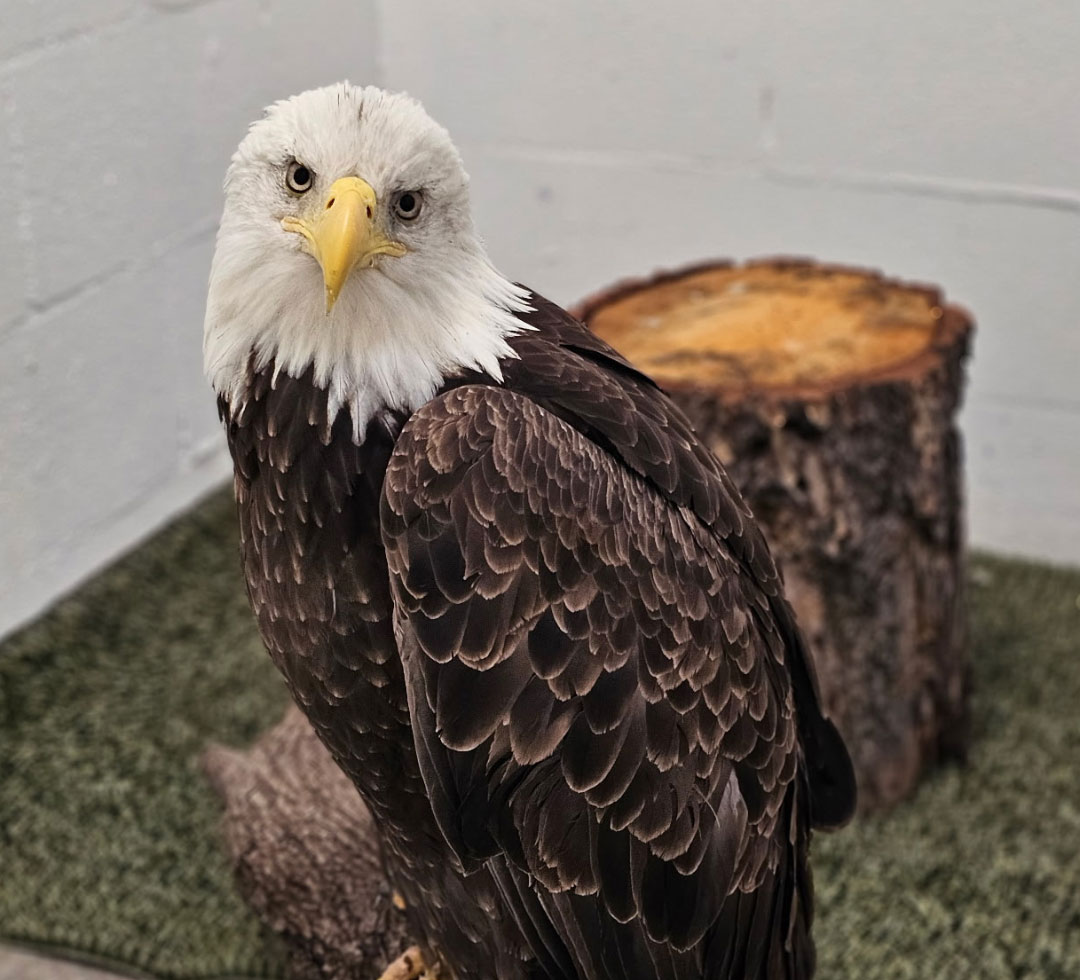
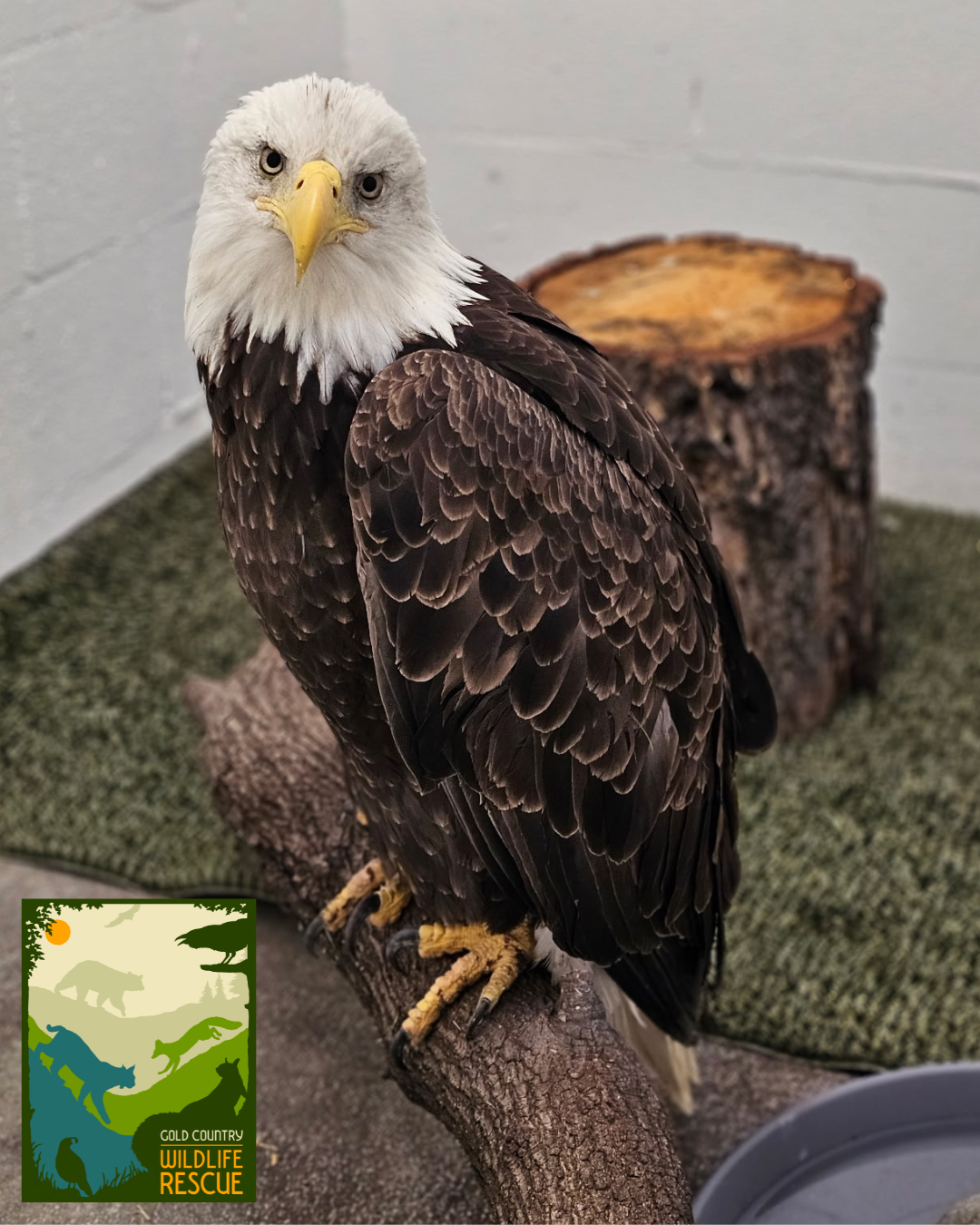
On March 9, 2026, Gold Country Wildlife Rescue (GCWR) admitted its 211th patient of the year: an adult Bald Eagle found grounded in the Sawtooth Recreation area of the Tahoe National Forest. Unable to take flight, the eagle was quickly transported to our triage center for a comprehensive evaluation.
Initial Assessment
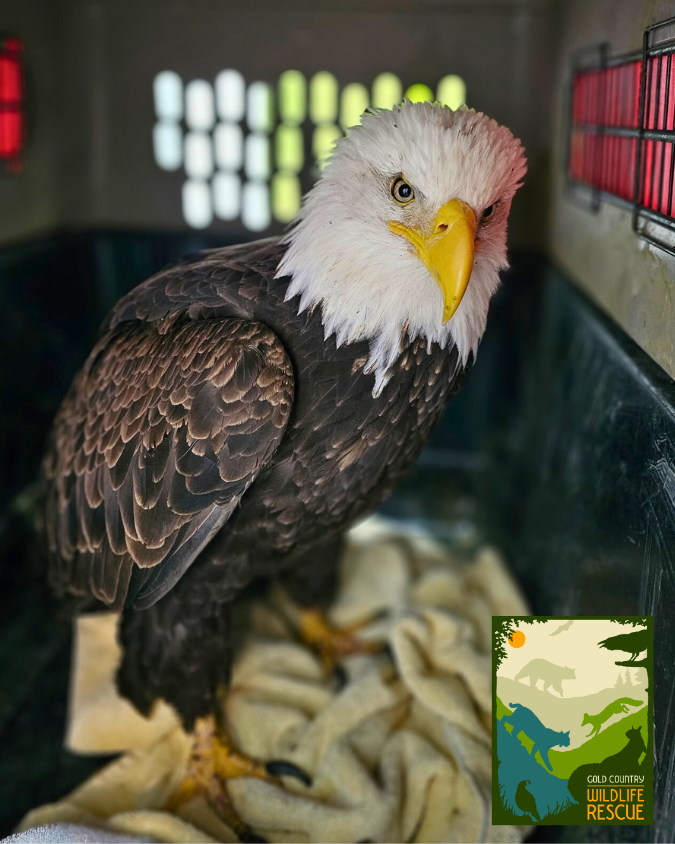
The intake examination was performed by the GCWR team and Dr. Victoria Joseph, DVM, of Bird Of Prey Health Group. Initial findings were cautiously optimistic:
- Body Condition: The eagle maintained a healthy body weight.
- Physical Exam: A full musculoskeletal exam revealed no fractures or major external trauma.
- Dietary Signs: A strong “fishy” smell indicated the bird had been successfully hunting and eating in the wild shortly before being grounded.
Diagnostic Investigative Work
Because no obvious physical injuries were present, our team began a series of diagnostic tests to determine the underlying cause of the bird’s inability to fly.
Toxicology & Viral Testing Two of the most common threats to California’s raptor populations are lead poisoning and Highly Pathogenic Avian Influenza (HPAI). We are pleased to report that Patient #26-211 tested negative for both.
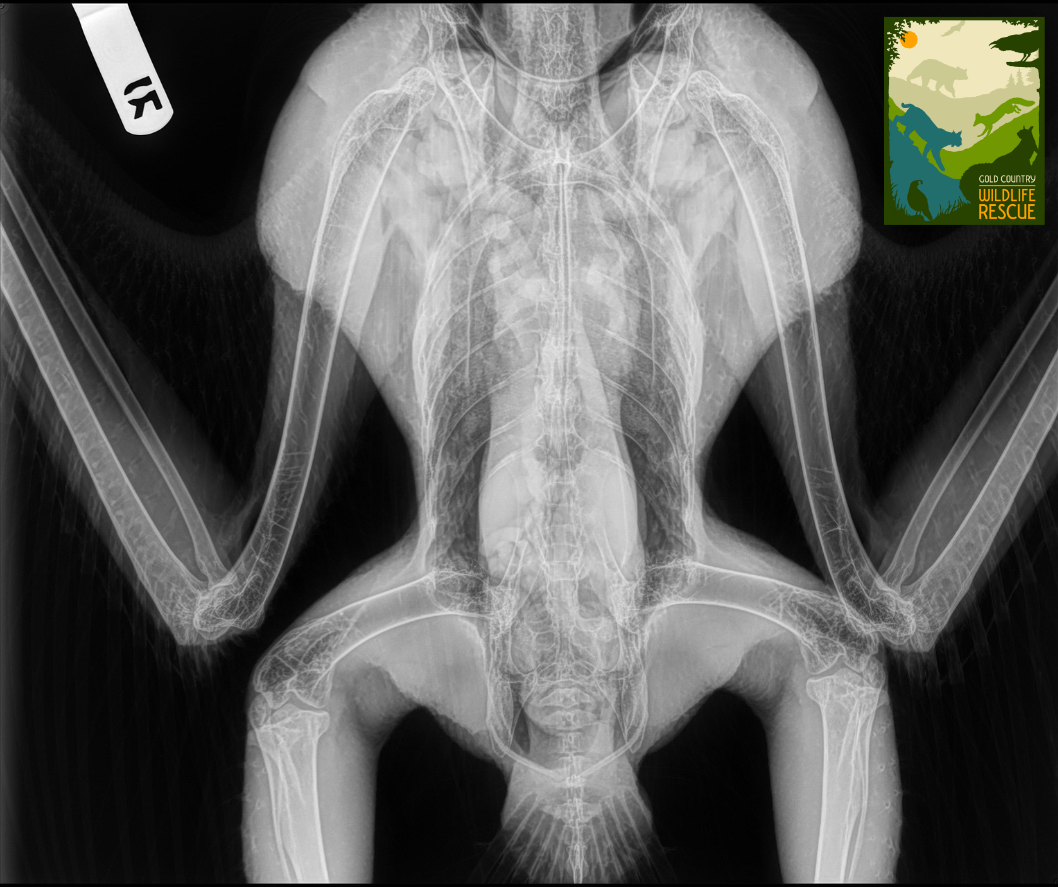
Radiographs (X-rays) On March 14th, Dr. Joseph performed a series of radiographs. The imaging showed no internal masses or hidden skeletal issues, with the scans appearing largely normal.
Blood Chemistry Results While the eagle is eating well and responding to supportive care,e including fluids and deworming treatment, blood chemistry results have revealed some abnormalities. Specifically, two enzymes (AST and CK) are currently outside of the normal range. While protein levels remain healthy, these elevated enzyme values suggest potential underlying muscle or cardiac issues.
Current Status and Future Care
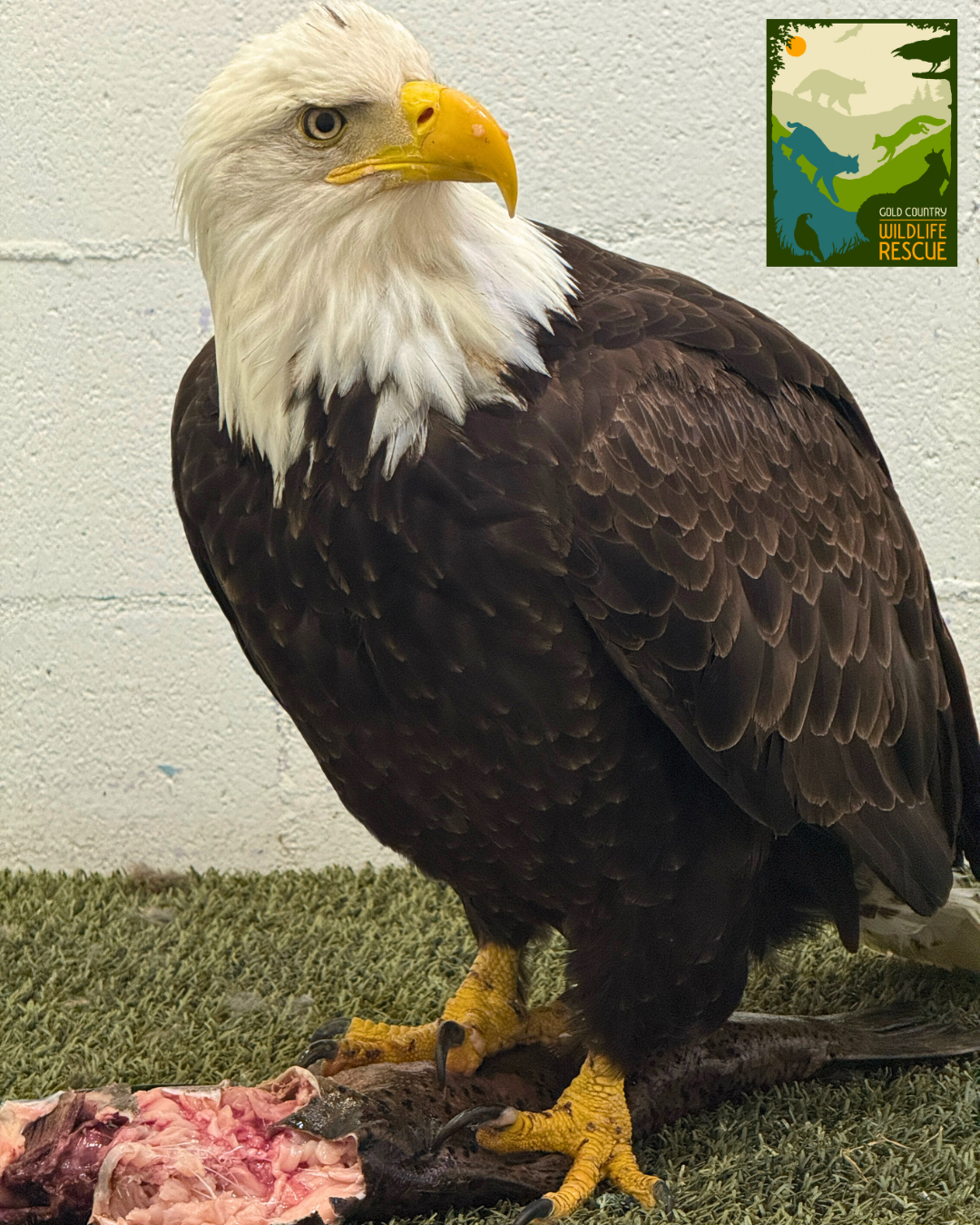
Patient #26-211 remains stable and is currently feasting on a diet of fresh trout provided by community donors. The eagle’s clinical team is monitoring the bird closely while providing a quiet, stress-free environment for recovery.
Next Steps: The eagle will soon be transferring into a larger outdoor enclosure where we can monitor its behavior, energy levels, and general condition and a follow-up blood panel is scheduled for late March (in approximately 10–14 days). If the AST and CK enzymes remain elevated, the next diagnostic step will likely be a cardiac ultrasound.
We remain guarded but cautiously optimistic. We will continue to work alongside Bird Of Prey Health Group to provide the precise, specialized care this resilient raptor requires.