Summer is here, and so is the hot weather. The extreme heat can be rough for wildlife and humans alike, and knowing what to do if you find an orphaned or injured wild animal needing help is key.
We often encounter patients who are made worse or cannot be saved not due to their original issue(s) but because rescuers think they are doing helpful things that are actually killing the animal with kindness. Let’s break down these five steps and discuss why each is so important.
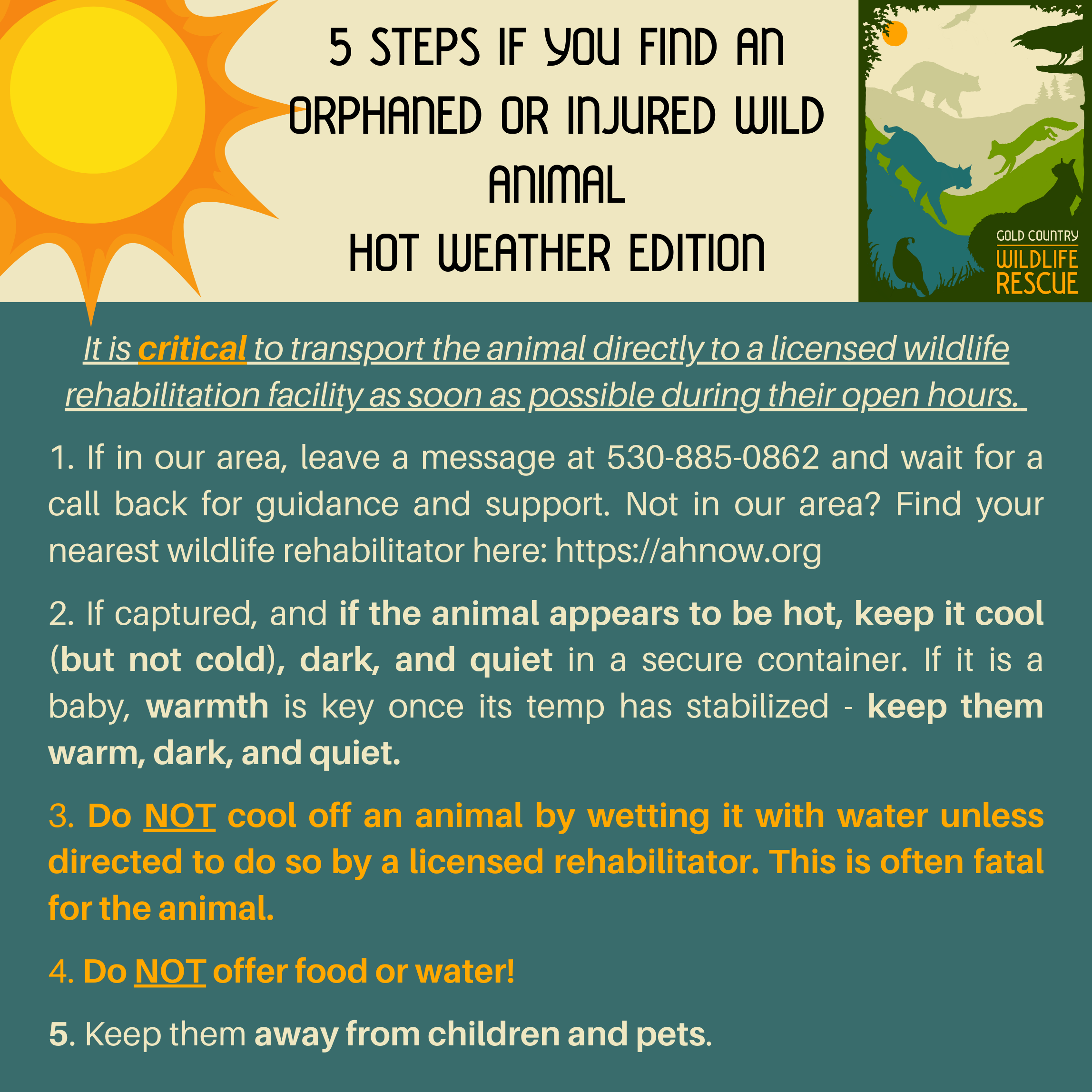
The first thing to know, before we even dive into the list, is that it is critical to transport wildlife directly to a licensed wildlife rehabilitation facility as soon as possible during their open hours. Not only is it illegal to keep native California wildlife without proper permits, but every hour that passes decreases the likelihood of the animal surviving.
Now for our five steps:
- If you are in our area, leave a message at 530-885-0862 and wait for a call back where you will receive guidance and further support. We call back as quickly as possible. If you’re not in our area, you can find your nearest wildlife rehabilitation here: https://ahnow.org
- If captured, make sure that the animal is in a secure container with plenty of ventilation. If the animal appears to be hot/overheating, keep it cool (but not cold), dark, and quiet. Note that if it is a baby, warmth is imperative once its temperature has stabilized. Once stabilized keep it warm, dark, and quiet. Remember that wildlife do not like humans, and being around us (smells, sounds, sights) can terrify them, add stress to their system, and can be fatal.
- Do not cool off a wild animal by wetting it with water unless directed to do so by a licensed wildlife rehabilitator. This can actually be very dangerous for an animal that is already sick or injured and can often be fatal.
- Do NOT offer food or water. Not only is a proper diet vital for proper nutrition and growth, but an improper diet can lead to severe health issues very quickly. Additionally, feeding and watering animals without proper training can lead to further injury or death more often than not.
- Keep the animal away from children and pets. This ties into #2. For the safety and well-being of all involved, keeping this animal as calm and quiet as possible is crucial. Even TV and radio noise can stress certain animals to fatal levels.
The best thing you can do for an orphaned, ill, or injured wild animal is to call your nearest wildlife rehabilitation facility for guidance and support. Getting the animal to help as quickly as possible in a safe and secure way will give it the best chance of returning to the wild.